

The Clinical Evidence for Omega-3 in Aging
As the global population ages, the search for evidence-based interventions that support longevity and quality of life has never been more urgent. Omega-3 fatty acids — particularly EPA (eicosapentaenoic acid) and DHA (docosahexaenoic acid) — have emerged as some of the most extensively studied nutrients in the context of healthy aging. Decades of epidemiological research have observed that populations with high dietary omega-3 intake, such as those in Japan and Scandinavia, consistently demonstrate lower rates of cardiovascular disease, cognitive decline, and chronic inflammation.
Aging is inevitable. Aging poorly is not. Omega-3 supplementation is one of the most evidence-based strategies for maintaining vitality.
Cardiovascular Health: The Heart of the Matter
Cardiovascular disease remains the leading cause of death worldwide, and the risk increases significantly with age. Omega-3 fatty acids support cardiovascular health through multiple mechanisms. EPA and DHA reduce blood triglyceride levels by up to 30%, lower resting blood pressure, decrease the formation of arterial plaques, and reduce the risk of dangerous cardiac arrhythmias.
For aging adults, maintaining adequate omega-3 status is one of the most well-supported nutritional strategies for protecting heart health over the long term.
Cognitive Function and Brain Health
The human brain is approximately 60% fat by dry weight, and DHA is the most abundant omega-3 fatty acid in brain tissue. DHA is critical for maintaining the fluidity and integrity of neuronal cell membranes, which directly affects how efficiently brain cells communicate with one another. As we age, DHA levels in the brain naturally decline, and this decline has been correlated with increased risk of cognitive impairment and dementia.
Multiple clinical studies have shown that omega-3 supplementation can slow the rate of cognitive decline in healthy older adults and may delay the onset of mild cognitive impairment. While omega-3 is not a cure for neurodegenerative diseases like Alzheimer's, the evidence strongly supports its role as a protective factor when consumed consistently over years.
The Distinct Roles of DHA and EPA
Although DHA and EPA are often discussed together, they serve distinct biological functions that are both essential for healthy aging. DHA is primarily a structural component — incorporated into cell membranes throughout the body, with particularly high concentrations in the brain and retina. EPA, by contrast, is primarily a functional molecule that serves as the precursor to anti-inflammatory signalling compounds called resolvins and protectins.
Recommended Intake for Aging Adults
Major health organisations including the American Heart Association, the European Food Safety Authority, and GOED recommend a minimum combined intake of 500 mg of EPA and DHA daily for general cardiovascular health. For adults over 50 or those with existing cardiovascular risk factors, many experts recommend higher intakes of 1,000 to 2,000 mg daily. It is important to note that these recommendations refer to the amount of actual EPA and DHA, not the total fish oil content — a distinction that is often overlooked on product labels.
Why PRISTIN Gold Delivers More
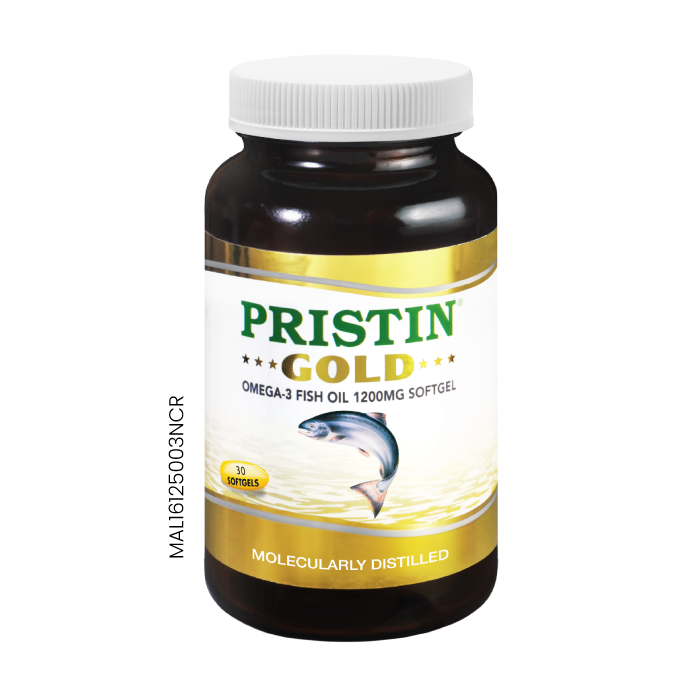
PRISTIN Gold Omega-3 is formulated specifically for adults who want to maximise the health benefits of omega-3 supplementation. Each capsule delivers a concentrated dose of EPA and DHA in the superior triglyceride form, ensuring up to 70% better absorption compared to ethyl ester alternatives. Sourced from EPAX-certified Norwegian fish oil, PRISTIN Gold undergoes rigorous third-party testing to guarantee purity, freshness, and potency.
“Aging is inevitable. Aging poorly is not. Omega-3 supplementation is one of the most evidence-based strategies for maintaining vitality and quality of life as we grow older.”
— Holista Nutrition Science Team